A Beginner's Guide to Choosing the Right Office Chair for Your Home
You can buy a beautiful desk, a decent monitor and a keyboard you love, and still end up fidgeting by two o'clock. The chair does more for how a long working day feels than almost anything else in a home office, and it is also the thing most people buy in a hurry. The range is bewildering: mesh, foam, headrests, four-dimensional armrests. Here is what genuinely matters, and what you can comfortably ignore.
Start With How You Actually Sit
Most people choose a chair by looking at it. A better starting point is your own working day. Do you sit for two hours or seven? Do you lean back to read, perch forward to type, or tuck one leg underneath you? Does anyone else use the same desk? A chair that suits an occasional user is not the same as one for someone who spends the whole day in it.
Then take two measurements. Note your desk height, and sit on a dining chair with your shoes on to measure the distance from the floor to the crease behind your knee. That second number tells you the seat height range you need. Anything more than a rough guide is a guess.
Lumbar Support: The Feature That Earns Its Keep
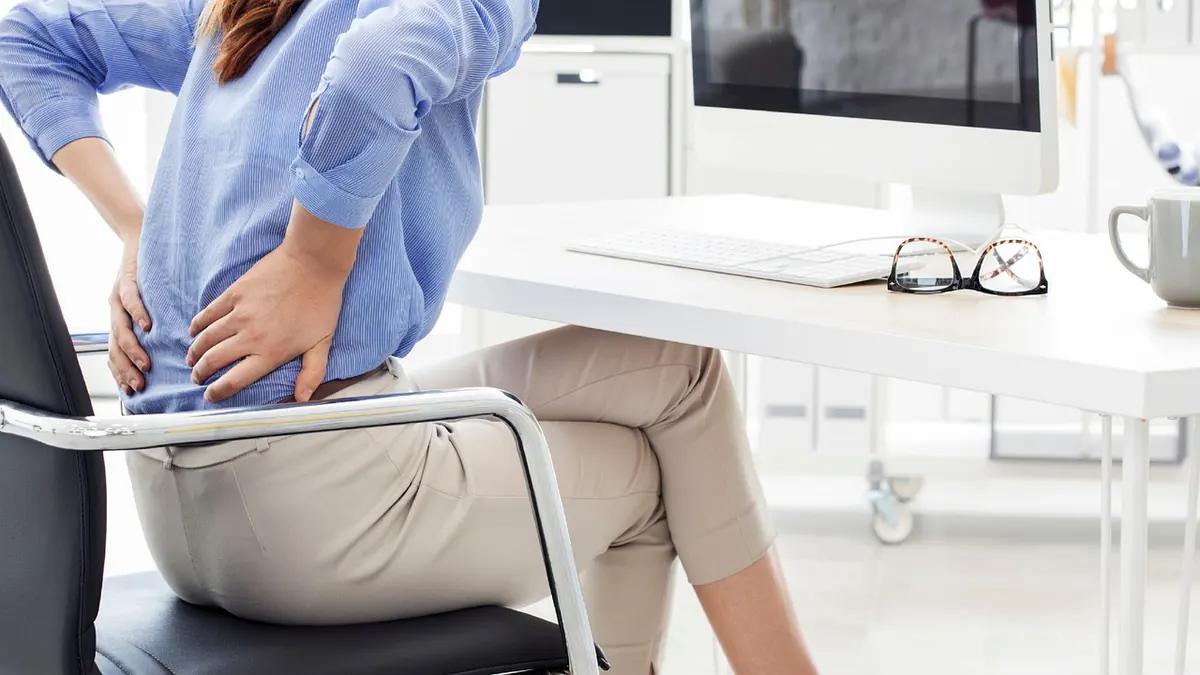
Discomfort usually starts in the lower back, and it usually starts because the curve of the spine has nothing behind it. Look for a backrest with an inward curve in the lower third, and preferably one you can move up and down. An adjustable lumbar pad is more useful than a fixed bulge, because the right height depends on your torso length, not your overall height.
As a rule of thumb, the support should sit in the small of your back, around your belt line or slightly above it. If it presses into your ribs, lower it. If it digs into your hips, raise it.
How firm should it feel?
Firm enough that you can feel where your back is, soft enough that you can lean into it for an hour without wanting to move. If you can feel the plastic frame through the padding, the cushioning is too thin to be doing much.
Adjustability: The Five Levers Worth Paying For
Chairs are marketed on the number of adjustments they offer, but five do most of the work.
- Seat height. You want your feet flat on the floor and your thighs level or sloping slightly down. Check the stated height range against your measurement from the dining chair test.
- Seat depth. A sliding seat lets you leave a small gap — about two or three fingers — between the front edge and the back of your knee. Too deep and the edge presses into your calves; too shallow and you slide forward all day.
- Backrest and lumbar height. See above. This is the one to prioritise if you can only afford two adjustments.
- Recline with adjustable tension. Being able to lean back a little and stay there is restful. Tension control means the chair does not fight you or tip you backwards unexpectedly.
- Armrest height. At minimum, arms should move up and down so your shoulders can relax. If they also slide inwards, you can tuck them out of the way when typing.
More adjustments mean more to get wrong. If you never recline, do not pay extra for an elaborate tilt mechanism.
Seat Depth, Height and the Ninety-Degree Myth
The traditional advice — knees and elbows at right angles, back straight as a ruler — is worth softening. Many people find a slight recline, somewhere around 100 to 110 degrees at the hips, easier on the lower back than sitting bolt upright for hours.
What matters more is support. Feet flat and supported, so use a footrest if your desk is tall and your legs dangle. No pressure behind the thighs from the seat edge. Shoulders low rather than creeping up towards your ears. If your seat has a rounded "waterfall" front edge, that helps reduce pressure behind the knees.
Materials: Mesh, Foam, Fabric and Leather
A mesh backrest breathes, which matters in a warm room or a south-facing one. Check that it has some give and that the frame does not dig into your shoulder blades. A mesh seat, however, is a different proposition: some people find it comfortable, others find the edge of the frame noticeable after an hour.
Foam seats live or die by density. Dense foam keeps its shape for years; cheap foam flattens within months and leaves you sitting on the base. Fabric is forgiving, quiet and easy to live with. Leather wipes clean, but bonded leather in particular can feel cold in winter and sticky in summer. If you run warm, a mesh back with a fabric seat is a sensible combination.
Armrests, Headrests and What to Skip
Armrests help your shoulders, but they must fit under your desk — measure the clearance before you buy. A headrest only earns its place if you genuinely recline; otherwise it tends to push your head forward. Racing-style seats with side bolsters look dramatic but do little for a typing posture.
Two things worth checking before you commit: a stated weight limit and a warranty on the gas lift and mechanism. A five-year cover on those parts tells you more about build quality than any photograph. Castors matter too — hard wheels for carpet, softer ones for wood or tile, unless you want to redecorate the floor.
Trying It Out, Then Setting It Up Properly
If you can, sit in a chair for twenty minutes before buying, ideally at a desk of a similar height to yours. If you are ordering online, check the returns policy and compare the seat width and depth against your own measurements rather than trusting a photograph.
Once it arrives, spend ten minutes on the setup:
- Set the seat height so your feet rest flat and your thighs are level or sloping slightly down.
- Slide the seat so there is a small gap behind your knees.
- Move the lumbar support into the small of your back.
- Set the armrests so your shoulders drop and your elbows sit just below desk height.
- Adjust the tilt tension until leaning back slightly takes almost no effort.
Then revisit it after a week, because bodies settle into chairs and small tweaks make a difference. If you already have a back or neck problem, or pain that lingers, speak to a physiotherapist or your GP — furniture can help, but it is not a treatment. And stand up every half hour or so. No chair, however well made, replaces moving about.
Photo: kevin120415 / Pixabay